






Verzending 24–48 u • Levering in de hele EU • Veilige chemieverpakking
Complexometry is a fascinating technique employed in analytical chemistry to determine the concentration of metal ions in a solution. By forming complex compounds with metal ions, complexometry allows for precise and accurate measurements, making it an indispensable tool in various industries.One of the key advantages of complexometry is its versatility. It can be applied to a wide range of metal ions, including those found in environmental samples, pharmaceuticals, and industrial processes. This makes it an invaluable method for monitoring and controlling the quality of products and ensuring compliance with regulatory standards.In complexometry, a chelating agent, known as a complexing agent or a ligand, is added to the sample solution. The ligand forms a complex with the metal ions of interest, resulting in a color change or other detectable signal. The formation of these complexes is highly specific, allowing for the selective determination of individual metal ions, even in complex mixtures.The choice of the ligand plays a crucial role in complexometry. Different ligands exhibit varying affinities for specific metal ions, leading to differences in the strength and stability of the resulting complexes. This selectivity enables accurate determination of metal ion concentrations, even in the presence of interfering substances.Furthermore, complexometry offers several advantages over other analytical techniques. It is relatively simple, cost-effective, and rapid, making it suitable for routine analysis in laboratories. Additionally, it requires minimal sample preparation, reducing the risk of contamination and saving time. These features make complexometry a preferred method for analyzing metal ions in various applications.From an SEO perspective, it is crucial to highlight the importance of complexometry in specific industries. For example, in the pharmaceutical sector, complexometry plays a pivotal role in quality control, ensuring the safety and efficacy of drug formulations. Similarly, in environmental monitoring, complexometry aids in detecting and quantifying heavy metal contaminants in water and soil samples.In conclusion, complexometry is an invaluable analytical technique used to determine metal ion concentrations with precision and accuracy. Its versatility, selectivity, and ease of use make it an indispensable tool in industries such as pharmaceuticals, environmental monitoring, and industrial processes. By employing complexometry, companies can ensure product quality, comply with regulations, and safeguard the environment.
Verfeinern nach
Filter
Filter
Endbenutzererklärung
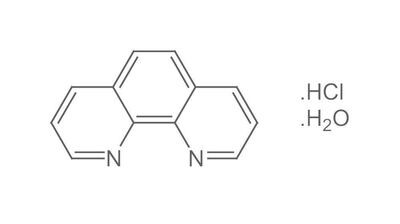
1,10-Phenanthrolin Hydrochlorid, Monohydrat, min. 99 %, p.a., 10 g, Glasverpackung
1,10-Phenanthrolin Hydrochlorid, Monohydrat, min. 99 %, p.a., 10 g, Glasverpackung
Nur für registrierte Unternehmen
Art.-Nr. KK21.2
€ 67,79
Endbenutzererklärung
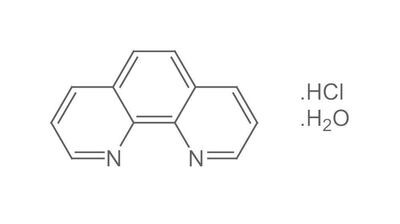
1,10-Phenanthrolin Hydrochlorid, Monohydrat, min. 99 %, p.a., 5 g, Glasverpackung
1,10-Phenanthrolin Hydrochlorid, Monohydrat, min. 99 %, p.a., 5 g, Glasverpackung
Nur für registrierte Unternehmen
Art.-Nr. KK21.1
€ 37,88
Endbenutzererklärung
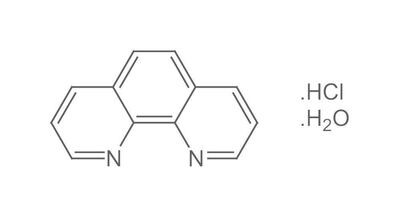
1,10-Phenanthrolin Hydrochlorid, Monohydrat, min. 99 %, p.a., 50 g, Glasverpackung
1,10-Phenanthrolin Hydrochlorid, Monohydrat, min. 99 %, p.a., 50 g, Glasverpackung
Nur für registrierte Unternehmen
Art.-Nr. KK21.3
€ 270,34
Endbenutzererklärung
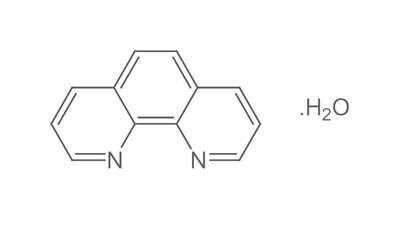
1,10-Phenanthrolin-Monohydrat, min. 99 %, p.a., ACS, 25 g, Glasverpackung
1,10-Phenanthrolin-Monohydrat, min. 99 %, p.a., ACS, 25 g, Glasverpackung
Nur für registrierte Unternehmen
Art.-Nr. 9113.3
€ 146,69
Endbenutzererklärung
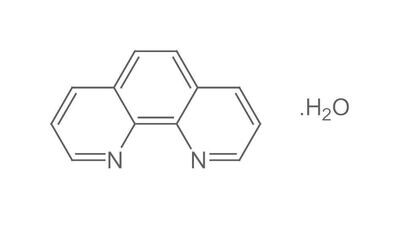
1,10-Phenanthrolin-Monohydrat, min. 99 %, p.a., ACS, 5 g, Glasverpackung
1,10-Phenanthrolin-Monohydrat, min. 99 %, p.a., ACS, 5 g, Glasverpackung
Nur für registrierte Unternehmen
Art.-Nr. 9113.2
€ 41,31
Endbenutzererklärung
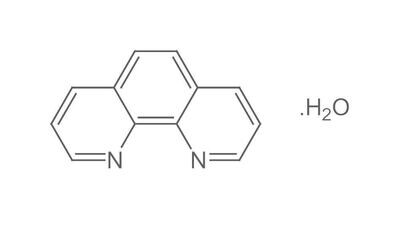
1,10-Phenanthrolin-Monohydrat, min. 99 %, p.a., ACS, 50 g, Glasverpackung
1,10-Phenanthrolin-Monohydrat, min. 99 %, p.a., ACS, 50 g, Glasverpackung
Nur für registrierte Unternehmen
Art.-Nr. 9113.1
€ 261,72
Endbenutzererklärung
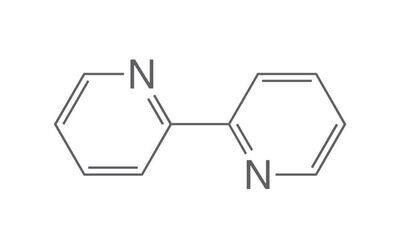
2,2'-Dipyridyl, min. 95 %, für die Biochemie, 25 g, Glasverpackung
2,2'-Dipyridyl, min. 95 %, für die Biochemie, 25 g, Glasverpackung
Nur für registrierte Unternehmen
Art.-Nr. 4153.2
€ 69,60
Endbenutzererklärung
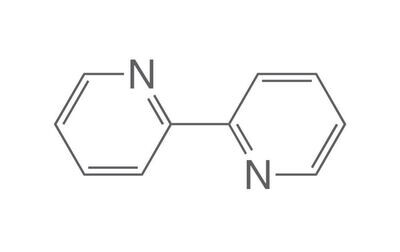
2,2'-Dipyridyl, min. 95 %, für die Biochemie, 5 g, Glasverpackung
2,2'-Dipyridyl, min. 95 %, für die Biochemie, 5 g, Glasverpackung
Nur für registrierte Unternehmen
Art.-Nr. 4153.1
€ 22,90
Endbenutzererklärung
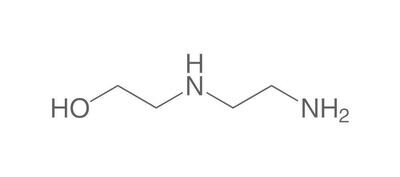
2-(2-Aminoethylamino)ethanol, min. 98 %, zur Synthese, 1 l, Glasverpackung
2-(2-Aminoethylamino)ethanol, min. 98 %, zur Synthese, 1 l, Glasverpackung
Nur für registrierte Unternehmen
Art.-Nr. 6717.3
€ 67,79
Endbenutzererklärung
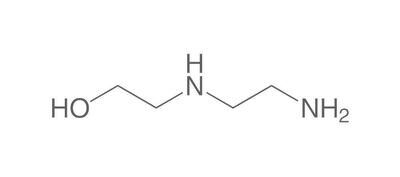
2-(2-Aminoethylamino)ethanol, min. 98 %, zur Synthese, 100 ml, Glasverpackung
2-(2-Aminoethylamino)ethanol, min. 98 %, zur Synthese, 100 ml, Glasverpackung
Nur für registrierte Unternehmen
Art.-Nr. 6717.1
€ 22,47
Endbenutzererklärung
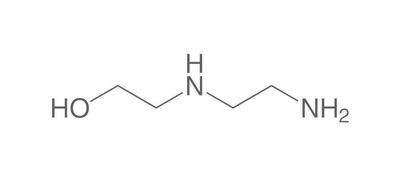
2-(2-Aminoethylamino)ethanol, min. 98 %, zur Synthese, 2.5 l, Glasverpackung
2-(2-Aminoethylamino)ethanol, min. 98 %, zur Synthese, 2.5 l, Glasverpackung
Nur für registrierte Unternehmen
Art.-Nr. 6717.4
€ 143,81
Endbenutzererklärung
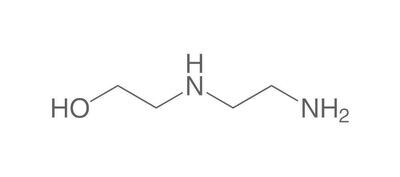
2-(2-Aminoethylamino)ethanol, min. 98 %, zur Synthese, 500 ml, Glasverpackung
2-(2-Aminoethylamino)ethanol, min. 98 %, zur Synthese, 500 ml, Glasverpackung
Nur für registrierte Unternehmen
Art.-Nr. 6717.2
€ 42,48
Endbenutzererklärung
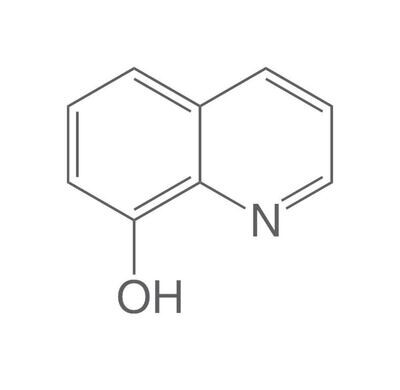
8-Hydroxychinolin, p.a., ACS, 100 g, Glasverpackung
8-Hydroxychinolin, p.a., ACS, 100 g, Glasverpackung
Nur für registrierte Unternehmen
Art.-Nr. 2557.2
€ 114,92
Endbenutzererklärung
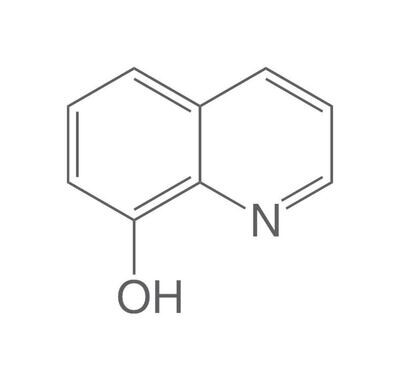
8-Hydroxychinolin, p.a., ACS, 250 g, Glasverpackung
8-Hydroxychinolin, p.a., ACS, 250 g, Glasverpackung
Nur für registrierte Unternehmen
Art.-Nr. 2557.3
€ 258,83
Endbenutzererklärung
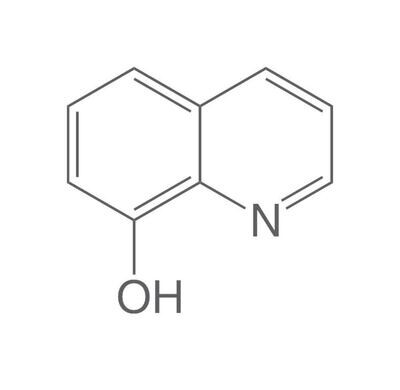
8-Hydroxychinolin, p.a., ACS, 50 g, Glasverpackung
8-Hydroxychinolin, p.a., ACS, 50 g, Glasverpackung
Nur für registrierte Unternehmen
Art.-Nr. 2557.1
€ 63,88
Endbenutzererklärung
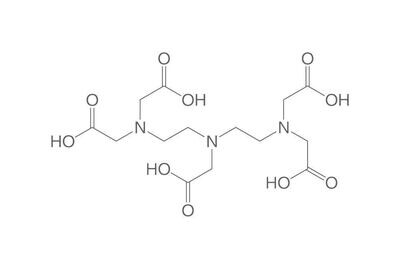
Diethylentriamin-pentaessigsäure, min. 99 %, zur Synthese, 1 kg, kunststoffverpackung.
Diethylentriamin-pentaessigsäure, min. 99 %, zur Synthese, 1 kg, kunststoffverpackung.
Nur für registrierte Unternehmen
Art.-Nr. 1407.4
€ 136,91
Endbenutzererklärung
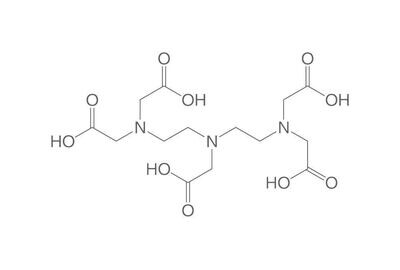
Diethylentriamin-pentaessigsäure, min. 99 %, zur Synthese, 100 g, kunststoffverpackung.
Diethylentriamin-pentaessigsäure, min. 99 %, zur Synthese, 100 g, kunststoffverpackung.
Nur für registrierte Unternehmen
Art.-Nr. 1407.1
€ 25,20
Endbenutzererklärung
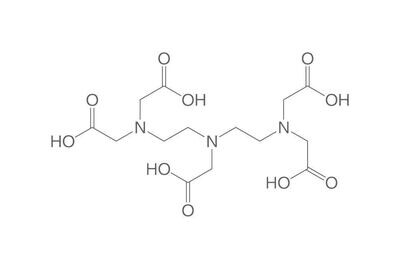
Diethylentriamin-pentaessigsäure, min. 99 %, zur Synthese, 250 g, kunststoffverpackung.
Diethylentriamin-pentaessigsäure, min. 99 %, zur Synthese, 250 g, kunststoffverpackung.
Nur für registrierte Unternehmen
Art.-Nr. 1407.2
€ 45,90
Endbenutzererklärung
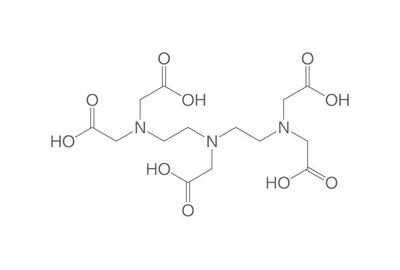
Diethylentriamin-pentaessigsäure, min. 99 %, zur Synthese, 500 g, kunststoffverpackung.
Diethylentriamin-pentaessigsäure, min. 99 %, zur Synthese, 500 g, kunststoffverpackung.
Nur für registrierte Unternehmen
Art.-Nr. 1407.3
€ 76,98
Preise anzeigen in:EUR