
Verzending 24–48 u • Levering in de hele EU • Veilige chemieverpakking
Bis(triphenylphosphine)nickel (II) chloride 25 g
SKU 000746-1
€ 120,28
End user declaration required
Copy of ID or Passport
Add More Files...
Application of the product:
Enter your text
I hereby confirm that:-That the substances, preparations and products are only used in an authorized manner (in accordance with European and national legislation), use these products only for research, scientific and educational purposes. The substance(s) ordered: -Not used to produce substances or to serve as a component or intermediate of narcotic drugs and/or psychotropic substances. -Not used in medicinal products for human or veterinary use, agriculture, food or cosmetics, except as a raw material, auxiliary or operating material and/or as a research and analytical reagent. - Not used to develop or produce chemical weapons - Not used for military or illegal purposes. - do not re-export the item(s) to third parties countries without prior approval of the export control authorities. -Will not be re-exported/exported or otherwise resold or transferred domestically or internationally to any destination subject to an EU, UN or US embargo, if that act would be contrary to the conditions of that embargo. - Only supplies the mentioned products to customers who can also provide such an End Use Certificate. We will carefully store all certificates received and provide them upon request. - I am over 18 years old.
Only for registered companies
In stock
1
Save this product for later
Bis(triphenylphosphine)nickel (II) chloride 25 g
Product Details
CAS number: 14264-16-5
Chemical formulas: [(C6H5)3P]2NiCI2/ F.W. 654.17
Packaging: 25 g
EAN: 8721028237958
Brand: Laboratoriumdiscounter
Bis(triphenylphosphine)nickel (II) chloride is a highly versatile and efficient catalyst used in various organic synthesis reactions. With its unique structure and properties, this compound offers exceptional reactivity and selectivity, making it a valuable tool for chemists and researchers. Its application in cross-coupling reactions, hydrogenation, and other transformations has made it a popular choice in the field of catalysis. Explore the potential of Bis(triphenylphosphine)nickel (II) chloride to enhance your chemical reactions and achieve superior results.
When working with Bis(triphenylphosphine)nickel (II) chloride, it is important to follow proper safety precautions to ensure your well-being and minimize any potential risks. Here are some short safety instructions to consider: 1. Personal Protective Equipment (PPE): Always wear appropriate PPE, including gloves, safety goggles, and a lab coat or protective clothing, to protect your skin, eyes, and clothing from potential contact with the chemical. 2. Ventilation: Work in a well-ventilated area or use a fume hood to prevent the accumulation of any harmful vapors or gases. Ensure proper airflow to minimize exposure. 3. Handling: Handle the chemical with care, avoiding any spills or splashes. Use appropriate tools, such as a spatula or scoop, to transfer the compound, and avoid direct contact with your skin or eyes. 4. Storage: Store Bis(triphenylphosphine)nickel (II) chloride in a tightly sealed container in a cool, dry place, away from incompatible substances. Follow any specific storage instructions provided by the manufacturer. 5. Chemical Incompatibilities: Avoid mixing Bis(triphenylphosphine)nickel (II) chloride with incompatible substances, such as strong oxidizers or acids, as it may result in hazardous reactions. Consult the Safety Data Sheet (SDS) for information on chemical incompatibilities. 6. Spill and Leak Response: In case of a spill or leak, contain the area and prevent the spread of the chemical. Use appropriate absorbent materials to clean up the spill, and dispose of the waste according to local regulations. 7. Waste Disposal: Dispose of Bis(triphenylphosphine)nickel (II) chloride and any associated waste in accordance with local regulations. Do not pour it down the drain or dispose of it in regular trash. 8. Emergency Procedures: Familiarize yourself with the emergency procedures and safety equipment available in your work area, such as eyewash stations and safety showers. In case of accidental exposure or ingestion, seek immediate medical attention. Remember, these instructions are a general guideline, and it is essential to consult the specific Safety Data Sheet (SDS) and follow any additional safety recommendations provided by the manufacturer or your institution.
Please note, not all safety data for this product is available on our website, for a complete list of P en H sentences and other safety instructions please request the MSDS at our customer service
You May Also Like
End user declaration required
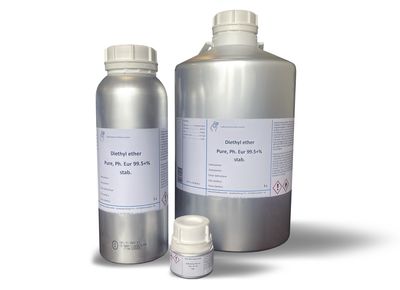
Diethyl ether 99.9 +% Ph. Eur. Stabilized 5 Liter
Diethyl ether 99.9 +% Ph. Eur. Stabilized 5 Liter
Only for registered companies
SKU DEE834.3
€ 48,20
End user declaration required
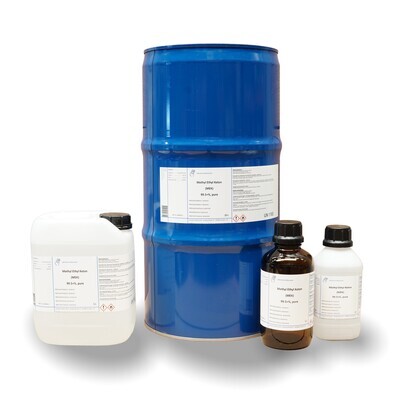
Methyl ethyl keton (MEK) 99,5+% 1 Liter glazen fles
Methyl ethyl keton (MEK) 99,5+% 1 Liter glazen fles
Only for registered companies
SKU ME934.4
€ 15,90
End user declaration required
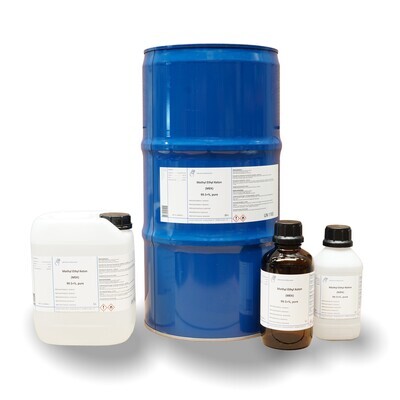
Methyl ethyl keton (MEK) 99,5+% 1 Liter HDPE fles
Methyl ethyl keton (MEK) 99,5+% 1 Liter HDPE fles
Only for registered companies
SKU ME934.1
€ 12,50
End user declaration required
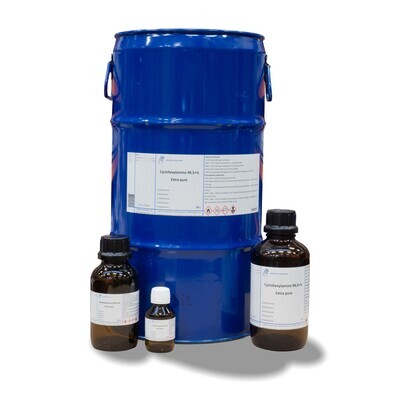
Cyclohexylamine 99.5+% extra pure 1 Liter
Cyclohexylamine 99.5+% extra pure 1 Liter
Only for registered companies
SKU CHA23.3
€ 30,10
Sold out
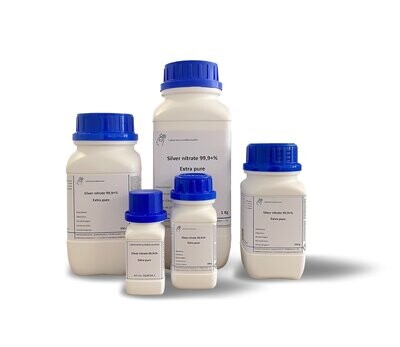
Silver nitrate 99.9 +% Extra pure 1 gram
Silver nitrate 99.9 +% Extra pure 1 gram
SKU AG4534.1
€ 7,35
Out of stock
Display prices in:EUR