

Verzending 24–48 u • Levering in de hele EU • Veilige chemieverpakking
Gallium bromide, anhydrous 99.999% 5 g
SKU 003822
€ 657,85
In stock
1
Save this product for later
Gallium bromide, anhydrous 99.999% 5 g
Product Details
CAS number: 13450-88-9
Chemical formulas: GaBr3/ F.W. 309.46/ m.p. 121.5
Cation: Ga
Packaging: 5 g
EAN: 8721028225450
Brand: Laboratoriumdiscounter
Gallium bromide, anhydrous, is a highly sought-after compound used in various industries. With its unique properties and applications, this chemical compound plays a crucial role in fields like electronics, optics, and pharmaceuticals. From its ability to form stable complexes to its exceptional conductivity, Gallium bromide, anhydrous, offers unparalleled advantages for researchers and manufacturers alike. Discover the endless possibilities this compound brings to the table and unlock new opportunities in your industry.
When working with Gallium bromide, anhydrous, it is important to follow proper safety precautions to ensure your well-being. Here are some short safety instructions to keep in mind: 1. Personal Protective Equipment (PPE): Always wear appropriate PPE, including gloves, safety goggles, and a lab coat or protective clothing, to protect your skin, eyes, and clothing from potential contact with the chemical. 2. Ventilation: Work in a well-ventilated area or under a fume hood to prevent the accumulation of harmful vapors. Ensure that the fume hood is functioning properly before starting any work. 3. Handling: Handle Gallium bromide, anhydrous with care, as it can be toxic if ingested, inhaled, or comes into contact with the skin. Avoid any direct contact with the chemical and use proper tools, such as tongs or spatulas, to handle it. 4. Storage: Store Gallium bromide, anhydrous in a tightly sealed container in a cool, dry, and well-ventilated area, away from incompatible substances. Follow all storage guidelines and keep it out of reach of children and unauthorized personnel. 5. Spills and leaks: In case of spills or leaks, immediately contain the area and prevent the spread of the chemical. Use appropriate absorbent materials to clean up the spill and dispose of them properly according to local regulations. 6. Waste disposal: Dispose of Gallium bromide, anhydrous and any contaminated materials as hazardous waste in accordance with local, state, and federal regulations. Do not pour it down the drain or dispose of it in regular trash. 7. Emergency procedures: Familiarize yourself with the emergency procedures and safety protocols specific to your workplace. Know the location of safety equipment, such as eyewash stations and fire extinguishers, and how to use them. 8. Training: Ensure that you have received proper training on the handling, storage, and disposal of Gallium bromide, anhydrous before working with it. Seek guidance from experienced personnel or consult safety data sheets (SDS) for detailed information. Remember, these are just general safety instructions, and it is crucial to consult the specific SDS and follow the guidelines provided by the manufacturer for the safe handling of Gallium bromide, anhydrous.
Please note, not all safety data for this product is available on our website, for a complete list of P en H sentences and other safety instructions please request the MSDS at our customer service
You May Also Like
End user declaration required
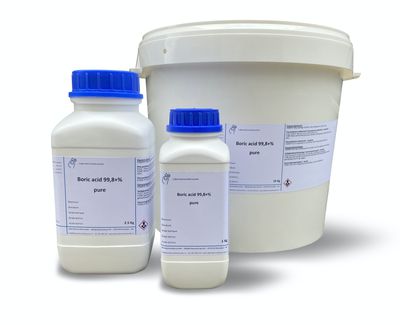
Boric acid 99.9+%, pure 1 Kilogram
Boric acid 99.9+%, pure 1 Kilogram
Only for registered companies
SKU BRZ94.1.2
€ 13,13
Display prices in:EUR