


Verzending 24–48 u • Levering in de hele EU • Veilige chemieverpakking
Hf chips 99.9% 25 g
SKU MHF001
€ 305,10
In stock
1
Save this product for later
Hf chips 99.9% 25 g
Product Details
Cation: Hf
Packaging: 25 g
EAN: 8721028227423
Brand: Laboratoriumdiscounter
HF chips, also known as high-frequency chips, are advanced integrated circuits that operate at high frequencies, enabling faster data transfer and improved performance. These chips are widely used in various industries, including telecommunications, automotive, and consumer electronics. With their exceptional speed and efficiency, HF chips play a crucial role in enhancing the functionality and connectivity of devices, making them an essential component in the digital age.
When working with HF (High Frequency) chips, it is important to follow safety instructions to prevent any potential hazards. Here are some short safety instructions to consider: 1. Wear appropriate personal protective equipment (PPE) such as gloves, safety glasses, and lab coats to protect yourself from any potential chemical or physical hazards. 2. Ensure that you are working in a well-ventilated area to minimize exposure to any fumes or gases that may be released during the handling or processing of HF chips. 3. Familiarize yourself with the Material Safety Data Sheet (MSDS) for the HF chips you are working with. This document provides important information about the potential hazards, handling procedures, and emergency response measures. 4. Avoid direct contact with HF chips or solutions. Use appropriate tools, such as tweezers or tongs, to handle the chips and minimize the risk of skin contact. 5. Store HF chips in designated containers or areas, away from incompatible materials. Follow proper storage and disposal procedures to prevent accidental spills or contamination. 6. In case of accidental exposure or contact with HF chips, immediately rinse the affected area with copious amounts of water for at least 15 minutes. Seek medical attention promptly. 7. Do not eat, drink, or smoke in the vicinity of HF chips to prevent ingestion or inhalation of any potentially harmful substances. 8. Follow proper handling and disposal procedures for HF chips, including the use of appropriate waste containers and disposal methods in compliance with local regulations. 9. Regularly inspect and maintain equipment used for working with HF chips to ensure proper functioning and minimize the risk of accidents or malfunctions. 10. Familiarize yourself with emergency procedures, including the location of safety showers, eyewash stations, and fire extinguishers, in case of any accidents or incidents. Remember, these safety instructions are general guidelines, and it is essential to consult specific safety guidelines provided by the manufacturer or your organization when working with HF chips.
Please note, not all safety data for this product is available on our website, for a complete list of P en H sentences and other safety instructions please request the MSDS at our customer service
You May Also Like
End user declaration required
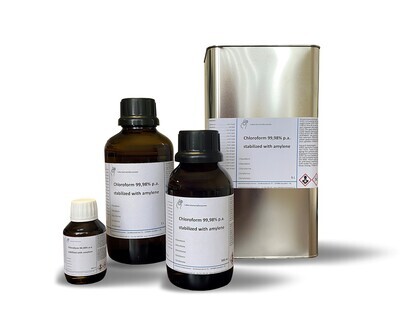
Chloroform 99,98% p.a. 100 Milliliter
Chloroform 99,98% p.a. 100 Milliliter
Only for registered companies
SKU CHL34.1
€ 9,98
Display prices in:EUR