

Verzending 24–48 u • Levering in de hele EU • Veilige chemieverpakking
HPTLC Plates Nano-SIL DIOL / UV254 - diol-modified, 25 Piece(s)
SKU 4699.1
€ 420,99
In stock
1
Save this product for later
HPTLC Plates Nano-SIL DIOL / UV254 - diol-modified, 25 Piece(s)
Product Details
HS code: 38229000
Material: Glass
EAN: 8721028182517
Brand: Macherey-Nagel
Material: glass with diol-modified nano silica gel 60, with fluorescence indicator.
Diol modification
Carbon content 5,5 %
Order of polarity:
silica > DIOL > NH2 > CN > RP-2 > RP-18 W
Layer can be equally well wetted by pure water and organic solvents, respectively.
Tip: for critical separations an alternative to silica, since it is less sensitive to the water content of the environment; leads to more reproducible results compared to silica.
Further attractive products to complete your chromatography laboratory can be found on our Chromatography page!
HPTLC Plates Nano-SIL DIOL / UV254 - diol-modified
Technical Information
| Plate format | 10 x 10 cm |
| Layer thickness | 0.2 mm |
| Material | glass |
| Modification | Silica gel with Diol (OH) modification |
| Fluorescent indicator | yes |
| Separation principle | Normal phase (NP) |
| Phase | Nano-SIL DIOL |
| Particle size | 2-10 µm |
| Particle type | Fully porous particles (FPP) |
| Pore size | 60 Å |
| Pore volume | 0.75 ml/g |
| pH stability | 2,0-8,0 |
| Temperature stability | High |
| Recommended application(s) | Nucleotides, Pesticides, Phenols, Purine derivatives, Reversed phase (RP) and Normal phase (NP), Steroids, Sugars, Vitamins, Xanthines |
Further attractive products to complete your chromatography laboratory can be found on our Chromatography page!
Thin Layer Chromatography (TLC)
Although the principle of thin-layer chromatography is more than a century old, it did not make its breakthrough as an analytical method until about 50 years ago.
Thanks to the development of new sorbents and supports, as well as increasing instrumentation and automation, TLC has become a versatile separation method. It is used both in qualitative analysis and in quantitative analysis.
Applications range from simple manual separation processes in classic TLC to automated processes in HPTLC (high performance thin layer chromatography).
Advantages of thin layer chromatography:
- Higher sample throughput in less time
- Suitable for screening tests
- Pilot process for HPLC
- The ready-to-use TLC layer functions as a data storage device for separation results
- The separated substances can be used later for further analysis (e.g. IR, MS)
- By switching the mobile and the stationary phases, the separation process can be optimised quickly and cost-efficient
You May Also Like
End user declaration required

Sodium chlorite 80% 500 gram
Sodium chlorite 80% 500 gram
Only for registered companies
SKU 9374.05
€ 29,30
End user declaration required
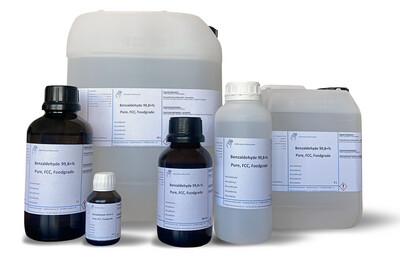
Benzaldehyde 99.8 +%, pure, FCC, food grade 1 Liter kunststof verpakking
Benzaldehyde 99.8 +%, pure, FCC, food grade 1 Liter kunststof verpakking
Only for registered companies
SKU BZH934.2
€ 18,59
End user declaration required
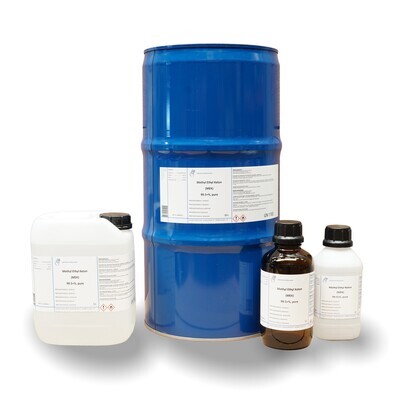
Methyl ethyl keton (MEK) 99,5+% 5 Liter
Methyl ethyl keton (MEK) 99,5+% 5 Liter
Only for registered companies
SKU ME934.2
€ 49,80
Display prices in:EUR