



















Verzending 24–48 u • Levering in de hele EU • Veilige chemieverpakking
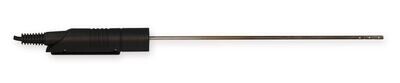
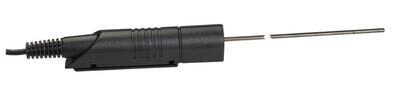
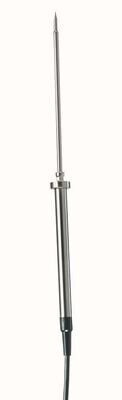
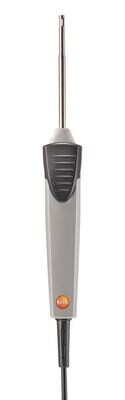
Temperature sensors and accessories
Temperature sensors and accessories are essential components in various industries and applications where accurate temperature measurements are crucial. Whether monitoring temperatures in an industrial oven, controlling temperatures in an HVAC system or measuring body temperature in the medical field, temperature sensors play a vital role in ensuring optimal performance and safety. A temperature sensor is a device that detects the temperature of an object or environment and converts it into an electrical signal. This signal can then be used to measure, control or monitor the temperature. There are several types of temperature sensors available, including thermocouples, resistance thermometers (RTDs), thermistors, and infrared (IR) sensors. Each type of sensor has its own unique properties and applications. Thermocouples are based on the principle of the Seebeck effect, where a temperature difference generates a voltage between two different metals. These sensors are very robust, have a wide temperature range and can withstand high temperatures. They are often used in industrial processes and applications where extreme temperatures are present. RTDs are made of metals such as platinum and have a positive temperature coefficient (PTC). This means that their resistance increases with increasing temperatures. RTDs offer high accuracy and stability, making them ideal for applications where precision is required, such as laboratories and medical equipment. Thermistors are semiconductor devices that have a negative temperature coefficient (NTC), meaning their resistance decreases with increasing temperatures. They are cost-effective, have a fast response time and are suitable for applications where fast temperature measurement is required, such as in electronics and consumer electronics. Infrared (IR) sensors use the infrared radiation that objects emit based on their temperature. These sensors can measure the surface temperature of objects without contact and are often used in applications where direct contact is not possible or desirable, such as food processing and medical diagnostics. In addition to temperature sensors, various accessories are also available to improve functionality and performance. This includes temperature transmitters, temperature controllers and temperature calibrators. Temperature transmitters are devices that convert the output signal of a temperature sensor into a standard signal, such as 4-20 mA, that can be easily interpreted by other equipment, such as PLCs and DCS systems. They ensure reliable and accurate transmission of temperature data over long distances. Temperature controllers are devices that regulate temperature based on input from a temperature sensor. They can be used to maintain temperatures within a certain range by controlling heating or cooling systems. These controllers are vital in industrial processes where a constant temperature is required for optimal performance and product quality. Temperature calibrators are used to check and calibrate the accuracy and reliability of temperature sensors. They provide a reference point for comparing a sensor's readings and can be used to correct any deviations. This is especially important in industries where accurate temperature measurements are critical, such as the pharmaceutical and food industries. In short, temperature sensors and accessories play an essential role in various industries and applications where accurate temperature measurements are vital. Whether monitoring industrial processes, controlling temperatures in HVAC systems or measuring body temperature in the medical sector, these sensors and accessories provide reliable and accurate temperature measurements to ensure optimal performance and safety.
Refine by
Display prices in:EUR